Wait for Me
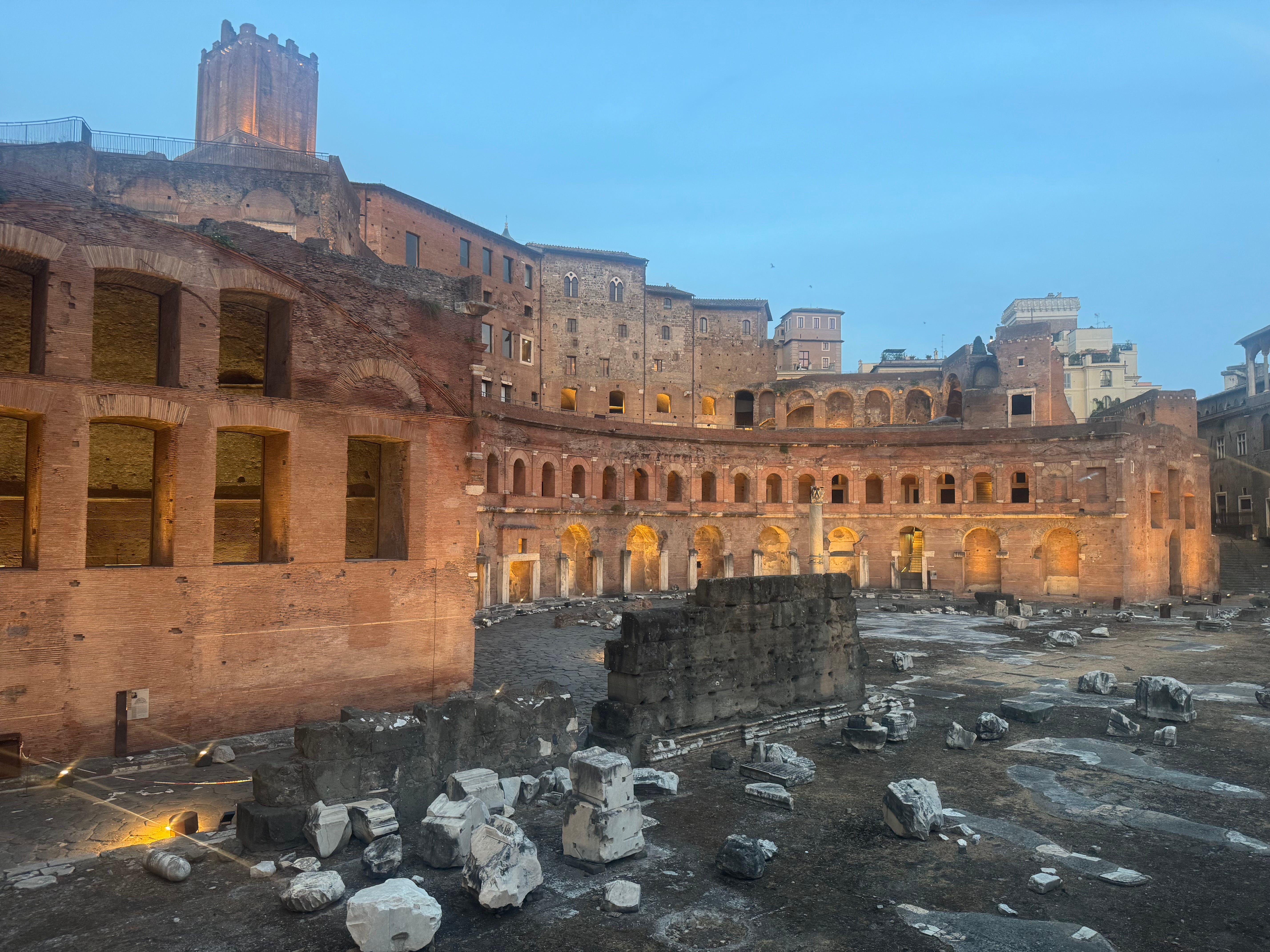
An ode to Pompeii and Hadestown

“And I think about a teacup, suspended and half-served/and all the scholars know is that it’s perfectly preserved.”— Dar Williams, Pompeii
“To know how it ends/and still begin to sing it again/as if might turn out this time”— Anais Mitchell, Hadestown (Road to Hell II)
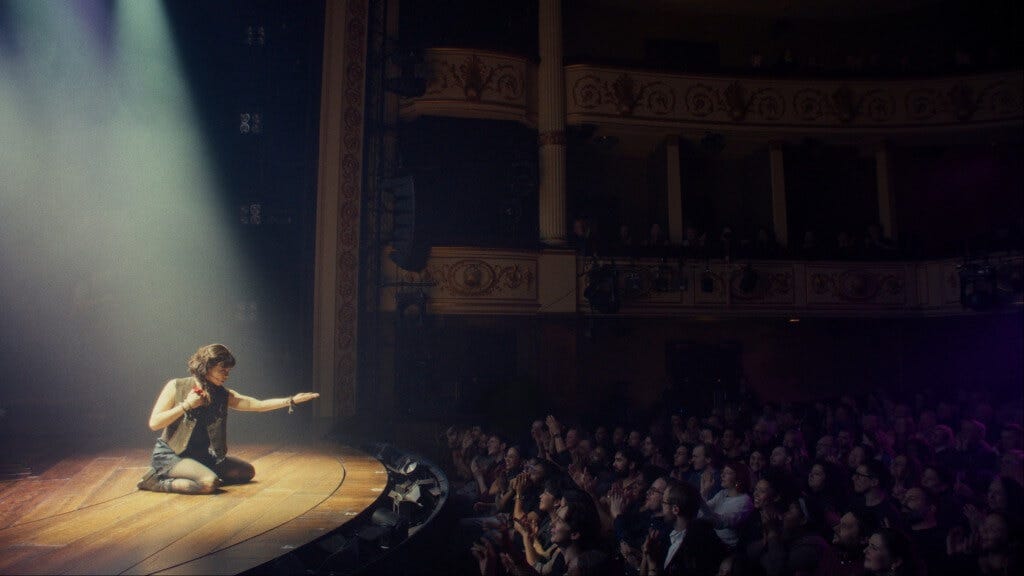
Eva Noblezada (Eurydice) in Hadestown (2026, Crosswalk Pictures and LD Entertainment)
The Odyssey is not the whole story of this summer’s classics revival.
Pompeii: Out of Time with Tom Hiddleston was last week’s top streaming show on Disney+, and the professional shot of Hadestown has now surpassed Hamilton for the most lucrative U.S. cinematic release of a filmed musical. I binged both in one day and was reminded that tragedy and history are where it’s at.
When Hadestown first landed on Broadway in 2019, I wasn’t ready for it. I had just been a bit too close to too many scalpels for a journey to the underworld. But I’m so glad I saw this professional capture of the original Broadway cast at the West End (filmed in 2025). It’s not a spoiler to say “it’s a sad song.” That’s nearly the first lyric. But I still spent most of it thinking, just maybe, it will end differently this time. Maybe he won’t turn around. Even though I’ve known the story since I read it in D’aulaire’s Book of Greek Myths as a kid.
“Wait For Me,” which I already loved, is now on heavy repeat on Spotify.
Pompeii: Out of Time is different. It’s a documentary, starring actor and “amateur classicist” Tom Hiddleston. Here, too, we know how it ends. Or do we? Vesuvius erupts, and Pompeii will be buried. But the writers and producers wring a great deal of dramatic tension out of the time between the first tremors and the destruction that killed so many people around the bay of Naples. All told, it took about a day.
At first I was worried that Pompeii: Out of Time’s search for survivors of the catastrophe would be too much of a redemption story. I winced at the idea of finding something good in such a catastrophe.
But in the end, it’s a sensitive portrayal. Hiddleston read classics at Cambridge (which fans of Loki already know; just watch how much fun he has in this clip!), and the production brings more nuance to thinking about history than the average documentary, particularly in the second two episodes.
The reenactments were clearly framed as a mix of history and imagination—at the end of the final episode, the curtain got pulled back for us to see the production of both Hollywood and history. I accept this. It can’t all be scholars sitting in libraries translating Latin inscriptions with Hiddleston, or jokes about the magic of solving ancient mysteries with spreadsheets. (The joke about the spreadsheet was my absolute favorite bit. People think studying antiquity is like being Indiana Jones, but actually, it’s laborious coding and programs that help you to find other variations of the same word). It’s also a delightfully interdisciplinary documentary, given just three episodes, with scholars ranging from classics to psychology.
I highly recommend this Instant Classics chat with Professor Mary Beard, journalist Charlotte Higgins, and Hiddleston. The conversation is absolutely fantastic, especially after minute 29 when they riff on history, acting, and casting in your imagination.
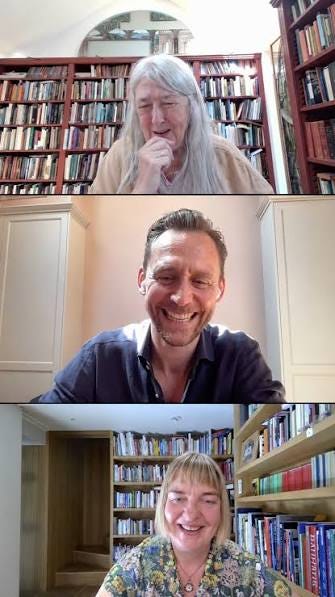
Professor Mary Beard, Tom Hiddleston, and Charlotte Higgins on Instant Classics
May all university students remember their education with the level of detail, enthusiasm, and awareness of privilege that Hiddleston brings to this interview. My goodness. He describes his tutorials and papers from Cambridge in granular detail. That’s the kind of thing nerds like me talk about over drinks.
Like Hiddleston, I read the Stoics and The Aeneid in college, but in translation (my own degree required Hebrew instead). Like Hiddleston, I took it all very seriously. So seriously I would sit in the grass and wonder what these books meant for my friendships, my future. Daily.
This is why we need classics. Do you want actors who bring us rich, nuanced characters? Give them classics degrees. Or philosophy degrees. Or literature. Comparative religion. Anything with humans in it.
Unfortunately, in the United States, classics and other humanities programs are not doing so well. From Montclair State University to the University of Chicago, recent cuts in such departments—sometimes of entire programs—are massive. But in the media they consume, Americans want these topics. They are flocking to see The Odyssey, and Emily Wilson’s translation of it is trending on Amazon.
And yes, speaking of Emily Wilson (The Onion has the funniest take, and her reaction to that was gold), this stuff is complicated, which is why I like the Hiddleston/Mary Beard chat so very much. They are very careful to make it clear that the ancients are both close and impossibly far from us— like us and also “so very difficult to understand,” Beard reminds us.
But most of all, late in the interviews, when Hiddleston reflects on taking a degree in classics, he says “living in the doubt” has lasted. The world is complicated.
The more you learn, the more you know you don’t know everything.
This is what we need.
I was at a funeral yesterday, a week after Hadestown and Pompeii both took over my imagination (for now). The rabbi there invoked the willow tree, how it bends—how it gives way. That, he said, is what is needed for peace.
Something that gives way. Something pliable. Something that is not a wall. Something not too certain.
Hiddleston said that at university he had trouble coming up with endings to his papers. I struggled with the same thing. (And no, not just at the last minute). I still remember when one of my professors, a classicist by training, told me it was ok to end the paper with another question. So I did.
The best songs have questions.
“Who are you to think that you can walk a road that no one ever walked before?” the Fates asked Orpheus in Hadestown.
In reply, he sings his ancient melody.
Pompeii and Hadestown both remind us that we tell the stories again, and again, and again. We ask the questions.
We might think we know the endings. But we sing the songs again anyway.